
Cool House, Clammy Air: Fixing Indoor Humidity in San Antonio Homes
READ ARTICLE



Improving indoor air quality San Antonio homeowners can actually feel usually takes three fixes, in this order: seal the duct system so the air handler stops pulling dusty attic air into the house, install the highest MERV rating your equipment is designed to move air through, then control humidity. Those three steps handle most complaints about dust, stale smelling air, and allergy symptoms that feel worse indoors. Add-on devices can help in specific situations, but they belong at the end of the list, and none of them fix a leaky return.
Dust that reappears a week after a deep clean is rarely being generated inside the living space. Most homes in this metro have ductwork running through an unconditioned attic, and the return side of that system sits under negative pressure every minute the blower runs. A gap at a return plenum, a boot, or a poorly sealed filter cabinet becomes a straw pulling attic air into the house: insulation fibers, settled dust, and the fine construction dust that drifts over from ongoing suburban building.
Where the leak sits relative to the filter decides everything. Air pulled in ahead of the filter still gets filtered. Air entering at the cabinet seams or anywhere downstream goes straight to the coil and then into your bedrooms, whatever filter you bought. That is why some filter upgrades change nothing at all. Sealing that leakage is the highest value air quality project in a lot of local houses, and the US Department of Energy guidance on duct sealing treats it as an efficiency measure as well, so a tighter system often shows up on the CPS Energy bill too. Our duct cleaning and sealing work starts with locating leakage rather than assuming it.
Pollen is the other local variable. Mountain cedar drives cedar fever allergies in winter, oak coats everything in spring, and ragweed takes over in fall. Pollen grains are large as airborne particles go, so a decent filter captures a good share of what passes through it. Pollen also rides in through doors and gaps and settles on surfaces no filter will ever see. Filtration reduces the particulate load in the air moving through your system. It does not eliminate particles from a house, and any product sold on that promise deserves skepticism.
MERV stands for Minimum Efficiency Reporting Value, a measure of how well a filter captures particles across several size ranges. Residential filters run from roughly MERV 1 to MERV 16. MERV 8 catches larger dust and most pollen, MERV 11 adds finer particles, and MERV 13 reaches further into the fine range. Denser media means more resistance to airflow.
That resistance is where good intentions do damage. A MERV 13 one-inch filter dropped into a system engineered for a lower pressure drop starves the blower. Reduced airflow across the evaporator coil makes the coil run colder than designed, which brings ice, weak cooling, and eventually compressor trouble. In heating mode the same restriction lets heat build until the high limit switch trips. Those are the same failures a filter left in for six months causes, so a technician should ask what your system can handle before selling you a number.
Two things decide that answer: housing depth and blower capability. A one-inch slot holds very little media, so every step up in MERV costs real airflow. A four-inch or five-inch media cabinet carries several times the surface area, which allows MERV 11 or MERV 13 with a far smaller airflow penalty and much longer intervals between changes. A variable speed ECM blower can absorb some added resistance by ramping up, at the cost of more power draw. An older single speed blower simply moves less air. Measuring static pressure takes a few minutes and settles the question.
| Approach | What it actually does | Best fit | Watch out for |
|---|---|---|---|
| Sealing return and supply leaks | Stops unfiltered attic air from entering the system | Dusty homes with attic ductwork | Needs a real inspection, not a guess |
| One-inch filter, MERV 8 to 11 | Baseline capture of pollen and larger dust | Almost any system, as a minimum | Loads quickly in pollen season |
| Four-inch or five-inch media cabinet, MERV 11 to 13 | Higher capture with a small airflow penalty | Allergy households with space at the air handler | Requires installing a cabinet, not a thicker filter in an old slot |
| High MERV in a one-inch slot | Better on paper, restricted airflow in practice | Rarely a good trade | Frozen coils, stressed blower, high limit trips |
| In-duct purifier or added air cleaner | Treats some particles or odors on top of filtration | Specific concerns after the basics are handled | Claims vary widely, ask what was tested |
| Humidity control equipment | Holds indoor moisture in a comfortable range | Long humid cooling seasons, clammy rooms | Not a substitute for filtration |
Cooling season here runs for months, and equipment running that long in humid air has a second job beyond temperature. A system oversized for the house cools fast, satisfies the thermostat, and shuts off before it has removed much moisture. The house reads cool and still feels heavy, and the musty smell homeowners describe as bad air is often a humidity problem in disguise.
Fixes range from correcting airflow and fan settings to adding equipment. ENERGY STAR guidance on dehumidifiers helps with sizing, and our humidity control solutions page covers whole home options. Humidity control does not replace filtration, and filtration does not fix humidity.
Sealed ducts, a properly sized filter housing, and a filter matched to the equipment do most of the work in most homes. Devices added on top can earn their place once that foundation exists, and the credible ones are specific about what they were tested against. ENERGY STAR information on air cleaners is a fair reference for judging claims, especially for portable units, where room size and clean air delivery rate matter more than the copy on the box.
Treat anything advertised as eliminating allergens or perfecting a home’s air as a warning sign. Devices that intentionally produce ozone are a category we do not recommend. Recurring duct cleaning sold on its own, with no sealing and no report of what was found, buys a clean-looking first few feet of duct and little else. When a whole home air purifier is the right call, we can name the specific problem it solves in your house. If we cannot name it, you should not buy it, and we will tell you so.
Jessica Florez has used us twice, at two different homes, and the two experiences had almost nothing in common technically. Housing stock across this metro varies widely: attic runs of different vintages, different equipment sizes, different filter housings, different amounts of leakage. Her two homes had genuinely different needs, which is normal, and it is the reason we do not lead with a product recommendation.
The method on both visits was the same even though the answers were not. We looked at the house in front of us, then explained what we found and why it mattered before recommending anything. Jessica wrote that on each visit the team “took the time to educate me and walk me through the situation.” That is not a sales technique. It is the only way a homeowner can judge whether a filtration upgrade, a duct repair, or nothing at all is the right place to spend money.
She reached out during the hot summer months, when availability across the trade gets tight, and we were able to fit her in. Her review calls us reliable, knowledgeable, and reasonably priced, and she recommends us to other homeowners. Two houses, two different sets of recommendations, one method. Air quality work has to be matched to the specific building rather than pulled off a shelf.
One practical step before spending anything: pull your filter and study the frame and the slot it sits in. Daylight around the edges, air you can feel moving past the frame instead of through it, or a cabinet door held shut with tape all mean unfiltered air is entering your system, and that is a repair rather than a purchase. During pollen season, check the filter monthly instead of trusting the interval printed on the packaging.
Smart Choice Heating and Cooling is a family owned company that has served San Antonio and more than 25 surrounding communities for over 15 years, and you can read more about our team and how we work. We hold license TACLB 103516E, every technician is NATE certified and EPA Section 608 certified for refrigerant handling, and our 4.9 star rating across 202 Google reviews reflects upfront pricing, same-day service, and no unnecessary upsells. If dust or cedar fever season has you weighing an upgrade, our advanced air filtration systems page lays out the options, and we are glad to assess your house and say which ones actually apply to it. Maintenance membership plans are available for homeowners who would rather have filters and tune-ups handled on schedule.
No. A filter your blower cannot pull air through delivers less filtered air overall and can freeze a coil or trip a furnace limit switch. The right choice is the highest rating your filter housing and blower can handle.
Check a one-inch filter monthly, especially through cedar, oak, and ragweed seasons, and replace it when it looks loaded rather than on a fixed date. Four-inch and five-inch media filters last considerably longer.
No product can promise that. Better filtration and a tighter duct system reduce how much pollen circulates indoors, which many people do notice, but pollen still enters through doors, gaps, and clothing.
In most homes with attic ductwork, yes. Sealing return leakage stops unfiltered attic air from entering the system in the first place, which usually does more for dust than any device installed downstream.
Most homes feel best somewhere in the range of 40 to 50 percent relative humidity. If your house feels clammy at a comfortable temperature, the problem is moisture removal rather than filtration.
Alonzo Martinez is the owner of Smart Choice Heating and Cooling in San Antonio, with over 15 years in the trade and license TACLB 103516E. He leads a NATE certified team trained to diagnose airflow and air quality problems before recommending equipment, and he built the company on upfront pricing and recommendations homeowners can verify for themselves.

RESOURCES

A San Antonio house can be cool and still feel damp. Here is what actually drives indoor humidity, and which...
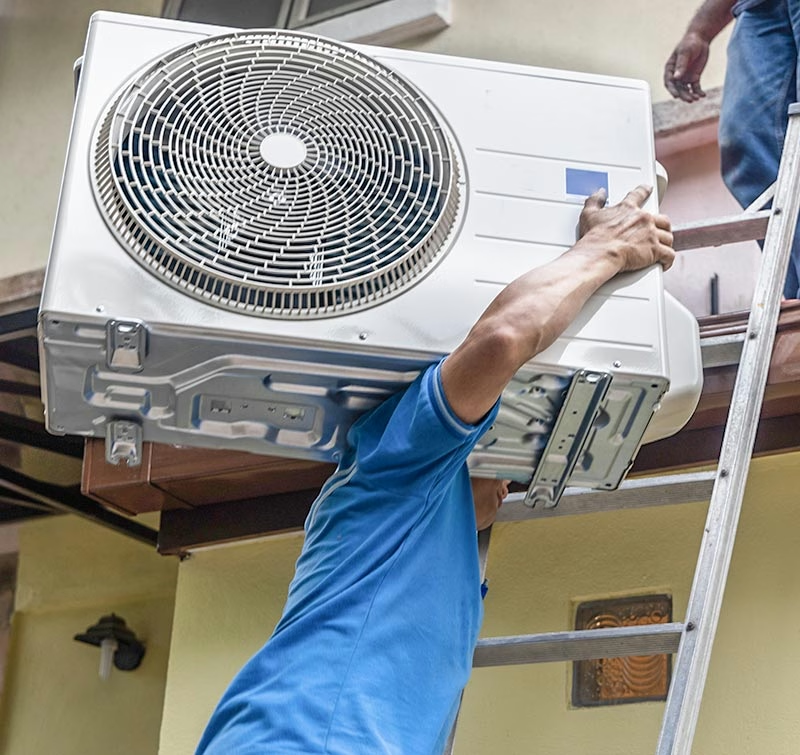
San Antonio's long cooling season and short winter make a heat pump a strong fit. Here is how it differs...

A clear line between HVAC failures that need a technician tonight and ones that can wait, plus how to keep...