What a Heat Pump Actually Does in a San Antonio Home
What a Heat Pump Actually Does in a San Antonio Home
Alonzo Martinez
August 4, 2026
10 min read
Google
4.9
Yelp
4.8
Facebook
4.9
Yes, and the reason is simple. San Antonio gives us a long, punishing cooling season with weeks of triple digit afternoons and a short, mild heating season broken up by a handful of genuinely cold weeks. That split is exactly the condition an air source heat pump is built for, so a heat pump San Antonio homeowners install spends most of the year doing the same job an air conditioner does, then reverses itself on cold mornings and heats the house without burning any fuel. It only needs help from a backup heat source during the coldest stretches.
We have spent over 15 years replacing systems in this market, and the heat pump conversation has changed. It used to be a curiosity question. Now it is often the first option we put on the table for a full replacement. It is still not automatic, and the honest answer for your house depends on your ductwork, whether you already have gas service, how the thermostat is configured, and how your household actually runs the system. If you want the background on who you would be dealing with, you can read how our family owned company operates first.
The Heat Pump San Antonio Advantage: One System for Both Seasons
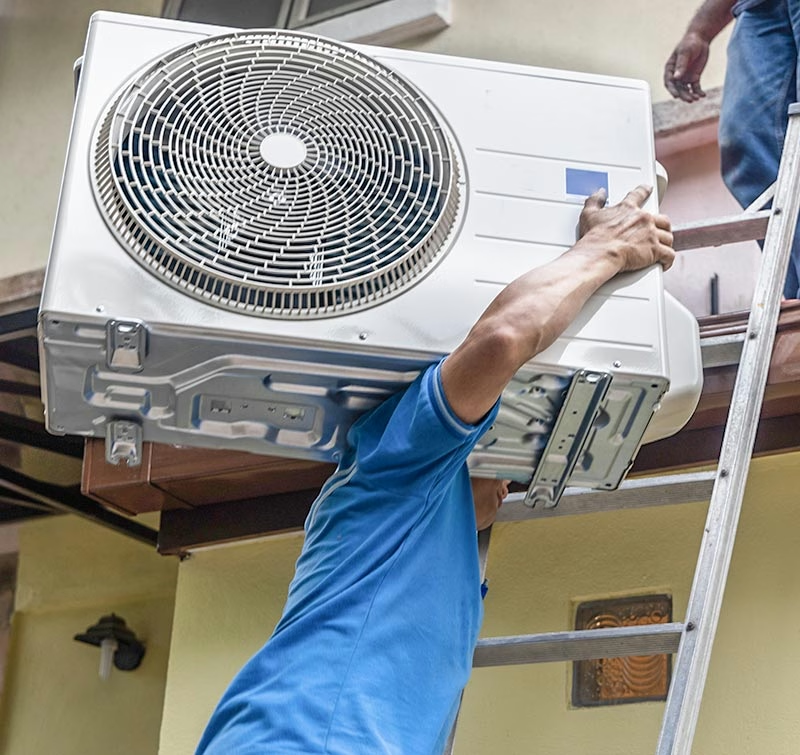
A heat pump does not create heat. It moves heat, the same way your refrigerator moves heat out of the food compartment and dumps it out the back. In summer it pulls heat out of your house and rejects it outdoors, which is precisely what your current air conditioner already does. In winter a reversing valve flips the refrigerant flow so the system pulls heat out of the outdoor air, even air that feels cold to you, and delivers it inside. The US Department of Energy’s guide to air source heat pumps covers the mechanics, and its broader overview of heat pump systems explains the available configurations.
The practical result here is that one outdoor unit and one indoor air handler carry both seasons. There is no furnace sitting unused from March through November, no gas burner, and no combustion inside the house. In a climate where cooling dominates the calendar, that consolidation is the real argument.
Heat Pump Versus Gas Furnace With AC in This Climate
The comparison below is specific to San Antonio conditions, not a national average. A gas furnace has real advantages in Minnesota. Those advantages matter much less on Old Perrin Beitel Road.
Consideration
Heat pump
Gas furnace with AC
Summer cooling
Same process and same comfort as a standard AC
Same process and same comfort
Winter heat source
Electricity, moving outdoor heat indoors
Natural gas, burned in the furnace
Air at the register in heating
Warm but noticeably cooler than furnace air, longer run times
Hot air in shorter bursts
Hard freeze performance
Leans on electric heat strips or a gas backup
Unaffected by outdoor temperature
Equipment to maintain
One system for both seasons
Two pieces of equipment on separate lifespans
Gas service required
No
Yes
Outdoor unit in winter
Runs, with normal defrost cycles
Sits idle
Fit for our season split
Strong, since cooling dominates the year
Workable, but the furnace idles most of the year
Neither column is a loser. Our climate rewards the heat pump for most of the year and only tests it for a few weeks.
Three Things That Surprise Homeowners After Installation
Heating mode air feels cooler at the vent
This is the most common first winter call we get. A gas furnace delivers air that is genuinely hot, well above body temperature, in short bursts. A heat pump delivers air that is warmer than the room but closer to your own skin temperature, in longer and steadier runs. Hold your hand over the vent and it can feel almost cool while the thermostat still climbs to the setting you asked for. The house gets there. The register just does not announce it the same way.
The outdoor unit runs in winter and goes through defrost cycles
Your outdoor unit will run on cold nights, and periodically it will run a defrost cycle to clear frost off the outdoor coil. During defrost the fan stops, the sound changes, and steam often rolls off the top of the unit. Homeowners see that and assume something is burning. It is normal operation and it ends on its own in a few minutes. What is not normal is a unit encased in ice, defrosting constantly, or blowing cold air indoors for long stretches, and those are worth a call for heat pump repair rather than a wait.
Auxiliary heat strips are the expensive part
Most heat pumps here include electric resistance heat strips in the air handler as backup, and those strips are the most expensive way to heat a house. They are meant to supplement the system during the coldest snaps and during defrost recovery, nothing more. A thermostat configured poorly, or a deep overnight setback that forces a hard morning recovery, can call for the strips when the heat pump alone would have gotten there, and that is where the shocking electric bill comes from. Ask your installer how the thermostat is set up, what conditions bring the strips on, and whether staging is correct before the crew leaves. Homes already running heat strips as their primary heat, which is common around here, usually gain the most from a heat pump, because the strips get demoted to backup duty.
Dual Fuel Makes Sense for Homes That Already Have Gas
Plenty of local homes have a gas furnace paired with an outdoor condenser. If that is your setup, price a dual fuel system. It pairs a heat pump outdoor unit with a gas furnace indoors, so the heat pump handles the mild heating that makes up most of our winter and the furnace takes over below a switchover temperature. No electric heat strips, hot supply air on the coldest nights, and the efficient option carrying ordinary days. It costs more up front because you are buying two heat sources, and it makes the most sense when the furnace is due for replacement anyway. Our heating installation work covers both paths, so this is not a pitch for one over the other.
Ductwork and Sizing Decide More Than the Badge on the Equipment
A heat pump will not fix leaky ducts. Homes built here between the 1970s and the 1990s often have ductwork running through an unconditioned attic that gets far hotter than the living space all summer, and every leak in that system is conditioned air you paid for and threw away. Efficient equipment attached to bad duct work still loses that air. The Department of Energy’s material on duct sealing explains why, and having duct cleaning and sealing evaluated alongside the replacement quote is usually the cheaper sequence.
Sizing matters just as much. An oversized system satisfies the thermostat quickly, shuts off, and never runs long enough to pull humidity out of the air, which leaves a house that is cool and clammy. Undersized equipment never catches up in August. A load calculation based on square footage, insulation, window area, and duct condition is what tells us the right capacity, and ENERGY STAR’s guidance on heating and cooling efficiently makes the same point about installation quality mattering as much as the box.
Questions to Ask Before You Sign Anything
What is the plan for the coldest nights: electric heat strips, dual fuel, or something else, and why that choice for my house
How will the thermostat be configured, and what brings backup heat on
What did the load calculation show, and what did you measure to get there
What condition are my ducts in, and is sealing part of this quote or separate
What is the total installed price in writing, with nothing left conditional
Which rebate or tax credit programs apply right now, what do I have to do to qualify, and who files the paperwork
A good answer to each of those is specific. A vague answer tells you something too.
Ginger Quick left us a review that gets at the part of this that matters most. She wrote that we “talked us through our options, did not pressure us at all, and were able to take care of our a/c needs that day,” and that “Everyone was professional and clean.” Her situation was an air conditioning need handled the same day, and the words we keep coming back to are options and no pressure. A system replacement is one of the bigger decisions a homeowner makes about a house. It should arrive with the choices laid out plainly, in language that makes sense, with room to think, and nobody should be signing under pressure on the day the old unit quits.
Rebates and Credits Change, So Confirm Them When You Buy
CPS Energy runs residential HVAC efficiency rebate programs, and federal tax credits exist for qualifying high efficiency equipment. Both change. Program budgets run out, qualifying tiers get revised, and federal credit rules shift with legislation. We will not print a dollar figure here, because any number in a blog post goes stale. Confirm current program terms at the time of purchase, get qualifying model numbers in writing, and keep your invoice and equipment documentation.
One Last Piece of Advice
Replace on your schedule, not the equipment’s. The weakest decisions we see get made in the middle of an August failure, with the house getting hotter by the hour, when any option that can arrive today looks like the right one. If your system is in its second decade and you are already thinking about it, get the evaluation done in the fall or early spring. You get real comparisons, honest lead times, and time to sit with the numbers.
If you want that conversation without a sales script attached, our heat pump installation team will walk the house, measure what needs measuring, and price the options side by side, including staying with the type of system you already have. We work throughout San Antonio and the surrounding metro with upfront pricing and no upsells you did not ask for.
Frequently Asked Questions
Does a heat pump keep up during a San Antonio winter?
For the large majority of our heating season, yes, and comfortably. During hard freezes it draws on backup heat, either electric strips or a gas furnace in a dual fuel setup, which is how the system is designed to work.
Will my utility bills go down if I switch from a gas furnace to a heat pump?
Your winter gas usage largely goes away and your winter electric usage rises, so the net result depends on current rates, your home’s envelope, thermostat setup, and how often backup heat runs. Ask for an estimate built on your house rather than a general claim.
Why is my outdoor unit steaming in winter?
That is a defrost cycle clearing frost from the outdoor coil, and the steam plus the change in sound are normal. Persistent ice buildup or constant defrosting is worth having looked at.
Is a heat pump the same as an air conditioner in summer?
Functionally, yes. It uses the same refrigerant cooling process, and the difference is a reversing valve that lets it also run in heating mode.
How long does a heat pump installation take?
Most straightforward changeouts are a single day. Duct repairs, electrical upgrades, or a switch from a gas furnace to an air handler can add time, and we say so before the work starts.
Alonzo Martinez is the owner of Smart Choice Heating and Cooling, a family owned company that has served San Antonio and 25 or more surrounding service areas for over 15 years under Texas license TACLB 103516E. Every technician on his team is NATE certified and holds EPA Section 608 certification for refrigerant handling. The company maintains a 4.9 star rating across 202 Google reviews.