Gas Furnace Will Not Fire Up or Blows Cold Air in a San Antonio Home
Gas Furnace Will Not Fire Up or Blows Cold Air in a San Antonio Home
Alonzo Martinez
August 4, 2026
13 min read
Google
4.9
Yelp
4.8
Facebook
4.9
If your furnace will not turn on or is blowing cold air, check three things before anything else: the thermostat mode and batteries, the breaker and the furnace service switch, and the air filter. Most of the furnace not working San Antonio calls we take on the first cold night of the season trace back to one of those three. Past that point, a gas furnace is a combustion appliance with safety controls that shut it down for a reason, and the diagnosis belongs to a licensed technician. If you smell gas at any point, leave the house and call the gas utility from outside.
Furnace Not Working San Antonio: The Three Checks That Solve Most No-Heat Calls
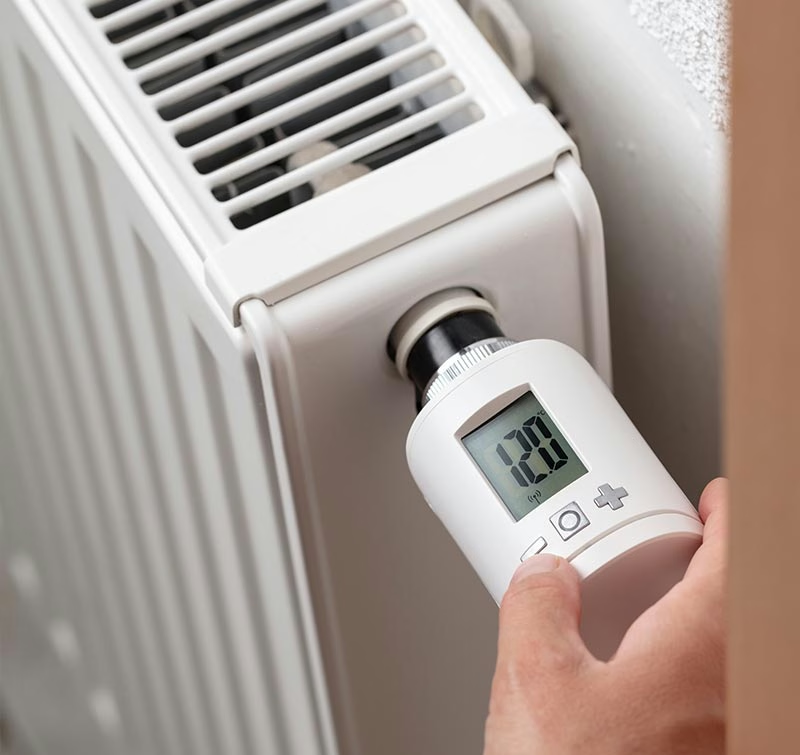
Start at the thermostat. It needs to be set to Heat rather than Cool or Off, with the fan on Auto and the setpoint raised at least three degrees above the current room temperature. Battery powered thermostats fail quietly, and a weak battery can leave the display lit while the heat call never actually reaches the furnace. If the screen is blank, or if a schedule or app setting changed recently, replace the batteries and set a simple hold before you assume the equipment failed. The Department of Energy explains how thermostat settings control your system, and if yours is aging or unreliable, a straightforward thermostat installation is a much smaller job than most people expect.
Next, power. A gas furnace still needs electricity to run the control board, the inducer motor, the igniter and the blower. Check the breaker labeled furnace, air handler or heat. Then find the service switch, which looks like an ordinary light switch mounted on or near the furnace cabinet. In San Antonio that cabinet is often in the attic, and anyone who has been up there storing boxes or running cable can flip that switch without noticing. Reset a tripped breaker one time. If it trips again, stop there. A repeat trip is an electrical fault, not a nuisance.
Third, airflow. This is the cause behind most complaints about a furnace blowing cold air. A furnace that cannot move enough air across the heat exchanger overheats, and the high limit switch cuts the burners while the blower keeps running. What you feel at the vents is room temperature air or something cooler. Cedar fever season runs through our winter and loads filters faster than people expect, so a filter that looked fine in October can be choked by January. Pull it out and look at it in the light. If it is gray and you cannot see light through the media, replace it, then confirm that supply vents and return grilles are open and not blocked by rugs, furniture or closed doors.
Gas Furnace Safety Is Not Negotiable
If you smell gas anywhere in the home, leave immediately. Do not flip light switches, do not unplug anything, do not use a lighter and do not stay inside to investigate. Get everyone out, then call the gas utility from outside and let them clear the home before you go back in. The same applies if you hear hissing near the furnace or the gas piping, or if anyone in the house feels dizzy, nauseated or unusually drowsy while the heat is running.
Every home with gas appliances should have working carbon monoxide alarms, including one near sleeping areas and one on each level. Press the test button now rather than during a freeze, and check the manufacturer date on the back, because alarms expire even when they still chirp on test. Combustion safety is the reason a gas furnace has multiple shutoff controls in the first place.
The most common mistake we see is repeated resetting. A furnace that goes into limit switch lockout has decided it is unsafe to fire, usually because it overheated or could not prove proper draft. Cycling the power to force it back on does not fix the condition that tripped it, and it puts heat and stress into a heat exchanger and a flue that are already telling you something. Never jumper, tape or bypass a limit, rollout, pressure or door switch, and never run the furnace with the door panel removed, because that panel completes a safety circuit and contains combustion. If you are without heat during a hard freeze and there are infants, elderly family members or medical needs in the home, treat it as an emergency HVAC repair rather than something to sit out overnight.
Safe to Check Yourself Versus Stop and Call
Here is the line, item by item. The left column is homeowner territory and takes about ten minutes. The right column involves gas, combustion, electrical controls or safety circuits, and needs a licensed technician with the right instruments.
Safe for you to check
Stop and call a licensed technician
Thermostat on Heat, fan on Auto, setpoint raised, fresh batteries
Thermostat wiring, staging, or a smart thermostat that never sends a heat call
Breaker for the furnace or air handler, plus the service switch at the unit
Any breaker that trips again after one reset
Air filter, replaced if it is gray or light will not pass through it
A filter that clogs again within a few weeks, which points to duct or blower problems
Supply vents and return grilles open and clear of rugs and furniture
Rooms that stay cold with vents fully open, which usually means an airflow or duct issue
Manual gas shutoff at the unit, visually confirmed in the open position
The gas valve on the furnace, manifold pressure, burners and anything inside the burner compartment
Condensate pan and float switch checked for standing water
Repeated condensate backups, drain repairs and any rust or scaling around the heat exchanger
Furnace door panel seated fully so the door switch closes
A furnace that locks out, needs resetting to run, or flashes an error code on the control board
What a Professional No-Heat Diagnosis Actually Looks Like
A real diagnosis starts by watching the entire ignition sequence, not by swapping parts. The thermostat sends a heat call, the inducer motor starts, the pressure switch proves draft, the igniter glows, the gas valve opens, the flame sensor proves flame, and the blower starts after a timed delay. Where that sequence stops is the diagnosis. A furnace that hums but never lights, one that lights and then drops out after a few seconds, and one that never energizes anything are three different problems. The control board also stores fault codes, and the blink pattern behind the access panel narrows the search before a single tool comes out of the bag.
From there it is measurement. Manifold gas pressure gets read with a manometer against the data plate. Temperature rise between the return and the supply gets compared to the range the manufacturer printed on that same plate, because a rise above spec is an airflow problem and a rise below spec is usually a gas or staging problem. Flame sense current gets measured in microamps, since a sensor coated with oxide will prove flame one minute and fail the next. We check blower amp draw, the capacitor, the blower wheel for packed dust or debris, the flue for blockage or disconnection, and the heat exchanger and burner area for cracks, rust and scaling. That is how an intermittent no-heat call becomes a specific failed component rather than a guess.
Smart Choice Heating and Cooling is a family owned company that has been doing this in San Antonio for over 15 years, holding Texas license TACLB 103516E, with every technician NATE certified and EPA Section 608 certified for refrigerant handling. We hold a 4.9 star rating across 202 Google reviews, we quote upfront pricing with no hidden fees, and we do not push equipment nobody needs. You can read more about our family owned team if you want to know who is coming to the door.
A Real San Antonio Call: Cooling Worked Fine, Heat Did Not
Marco Vidaurri called with a pattern we hear constantly once the first front moves through. His air conditioning was cooling normally, but the furnace side would not do anything when he switched over to heat. That combination confuses people, because the same blower and the same ductwork are involved either way. It is actually a useful clue: if cooling runs, the thermostat has power and the blower works, which moves suspicion to the heating side of the system.
Justin, the assigned technician, called ahead to say he was running a little behind, then went through both the indoor furnace and the outdoor unit rather than assuming. He confirmed the cooling side was fine and isolated the failure to the furnace not firing. Marco described what happened next: Justin “took off panels to see internal working and was able to determine the system may have heated up but turned off from overheating.” Justin replaced the filter and corrected wiring inside the cabinet, and the furnace still would not light. Instead of throwing parts at it, he called his supervisor, Alonzo, and the two of them worked the problem together until they found something physically blocking a rotating component, which was preventing the mechanical sequence the furnace needs to start.
Once that obstruction came out, the furnace lit and ran without further trouble. That call is a textbook overheat lockout with two contributing causes, a restricted filter and a mechanical obstruction, and it is also a good example of a technician escalating rather than guessing. Marco went on to ask about a maintenance agreement, which is the right instinct, because both of those conditions are the kind of thing a scheduled visit catches early. Our HVAC maintenance plans exist for exactly that reason.
Why San Antonio Furnaces Quit on the First Cold Night
Our winters are mild with short hard freezes, so a furnace here sits unused for eight or nine months and then gets asked to run hard for two or three days. Dust settles on the flame sensor and inside the blower housing. Insects and rodents get into attic mounted equipment, and plenty of homes built between the 1970s and the 1990s around San Antonio have exactly that setup. Condensate lines dry out and collect debris. None of it announces itself until the night the temperature drops and the burners are asked to work.
That is the argument for a fall heating tune-up before you need the heat. ENERGY STAR publishes a plain HVAC maintenance checklist covering the seasonal items, and the Department of Energy’s overview of furnaces and boilers is worth reading if you want to understand how efficiency and airflow relate on your own equipment. A furnace that ignites cleanly and moves the right volume of air also runs shorter cycles, which shows up on the CPS Energy bill during a cold snap.
Furnace Short Cycling and Repeat Lockouts Are a Message
Furnace short cycling looks like this: the burners light, the house starts warming, and a few minutes later everything shuts down and the blower keeps running. Common causes include restricted airflow from a filter or collapsed duct, a dirty flame sensor, a failing pressure switch, a partially blocked flue, or equipment that was oversized for the home when it was installed. Each of those is a real repair with a real fix, and none of them get better with time.
Pay attention to how many times you have reset the unit this season. One reset after a power blip is normal. Three resets in a week means a safety control is doing its job on a fault that is still there. If the furnace is more than roughly fifteen years old, has a cracked or heavily corroded heat exchanger, or needs a second major repair in the same season, we will lay out repair against replacement honestly instead of steering you toward one answer.
One Thing to Do Before the Next Cold Front
On the next mild afternoon, switch the thermostat to heat and let the furnace run a full twenty to thirty minutes. Warm dusty smell for the first few minutes is normal. What you are looking for is whether it still holds temperature at minute twenty, because a lockout will show up there and not in the first two minutes. If it quits, write down the blink pattern on the control board before you cut power, since that code disappears on a reset and it saves diagnostic time. When the furnace is locked out, short cycling or blowing cold air, our team offers same-day service and you can schedule heating repair in San Antonio with a technician who will tell you exactly what failed and what it costs before any work begins.
Frequently Asked Questions
Why does my air conditioning work but my furnace will not turn on?
Cooling and heating share the thermostat, the blower and the ductwork, so if cooling runs, those parts are functioning and the fault is on the heating side. That usually means the ignition sequence, a safety control such as a limit or pressure switch, or the gas supply to the furnace.
Is it safe to keep resetting my furnace?
One reset is reasonable. Repeated resets are not, because a furnace that keeps locking out is shutting itself down over an unresolved condition such as overheating or poor draft, and forcing it to fire adds stress to the heat exchanger and flue.
What is a limit switch lockout?
The high limit switch opens when the air around the heat exchanger gets hotter than the design allows, which shuts off the burners while the blower continues. After several trips the control board locks the furnace out until the underlying airflow or combustion problem is corrected.
How often should I change my filter during cedar season?
Check it monthly through winter and change it whenever it looks loaded, since cedar pollen and dust build up faster than the interval printed on the package. Homes with pets or ongoing remodeling work usually need it changed sooner.
Should I turn off the gas myself if the furnace will not fire?
If you smell gas, leave the home first and call the gas utility from outside rather than trying to shut anything down. If there is no gas odor, leave the valve alone and turn the furnace off at the service switch or thermostat until a technician can inspect it.
Sources and References
About the Author
Alonzo Martinez is the owner of Smart Choice Heating and Cooling, a family owned heating and air conditioning company serving San Antonio and more than 25 surrounding communities for over 15 years under Texas license TACLB 103516E. He works alongside a NATE certified technician team, and he still takes escalation calls from the field when a diagnosis needs a second set of eyes.