Ductless Mini Splits for Hard to Cool Rooms, Garage Conversions and Casitas in San Antonio
Ductless Mini Splits for Hard to Cool Rooms, Garage Conversions and Casitas in San Antonio
Alonzo Martinez
August 4, 2026
10 min read
Google
4.9
Yelp
4.8
Facebook
4.9
A ductless mini split San Antonio homeowners add to a converted garage, a casita, a sunroom or a back addition is usually the right tool, because those spaces have no ductwork and never did. It is the wrong tool when the real problem is leaking ducts, an undersized central system, or equipment already at the end of its life. Both situations feel identical from the couch: one room is miserable and the rest of the house is fine. The fix is not the same, and paying for the wrong one is the most expensive mistake I see homeowners make with a hard to cool room.
Over 15 years of installs across San Antonio and more than 25 surrounding service areas have taught me that the room tells you the answer long before the equipment catalog does. That includes the jobs where I talk a homeowner out of going ductless.
How a Ductless System Works in Plain Terms
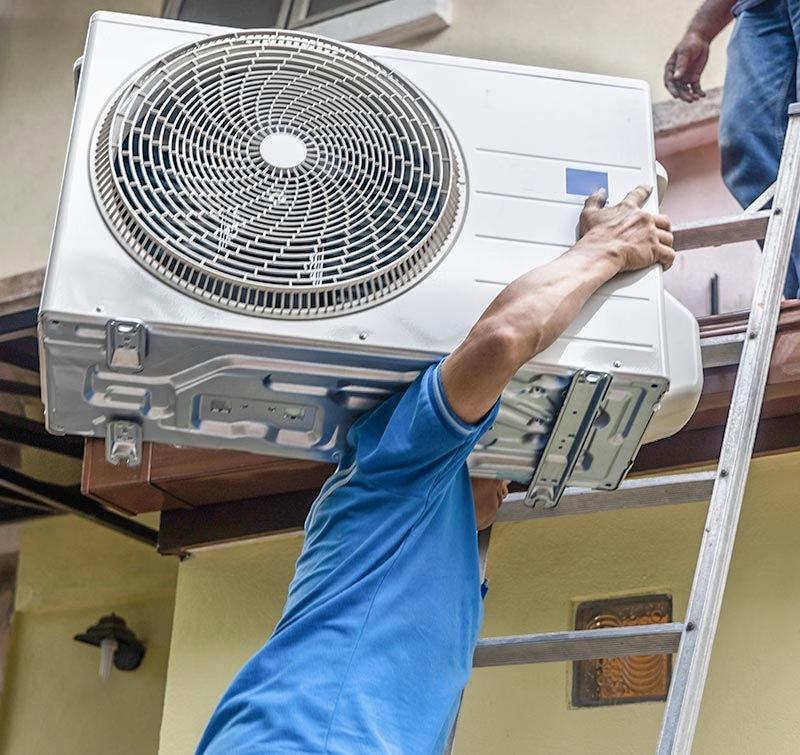
A ductless mini split is a small heat pump split in two. An outdoor condenser sits on a pad or a wall bracket, and a refrigerant line set, a control wire and a condensate line pass through a hole about the size of your fist. Inside, a head mounted high on the wall, recessed in the ceiling, or set low like a floor console delivers air directly to the room. No duct, no return grille, no shared air with the rest of the house. The US Department of Energy covers the layout of ductless mini split heat pumps in detail.
Because it is a heat pump, one unit cools through our triple digit afternoons and heats during the short hard freezes that interrupt a mild winter. The inverter compressor ramps up and down instead of slamming on and off, which is how a single room holds a steady temperature while the central system works on everything else.
Ductless Mini Split San Antonio Fit Check: Good Fit Versus Wrong Tool
Sort your situation into one of these columns before you shop for equipment.
Good fit for ductless
Wrong tool, fix something else
Converted garage, casita, enclosed patio, sunroom or workshop with no ductwork
The whole house is uneven and the attic ducts are leaking
One room runs hot or cold while the rest of the house stays comfortable
The central system short cycles, struggles, or loses refrigerant every summer
A space you want on its own schedule, like a home office or a workshop
You want whole house cooling on a budget and would need heads in every room
An addition the existing system has no spare capacity to reach
No practical spot for the outdoor unit or a workable condensate drain
A room currently limping along on window units or portable space heaters
The look of a head on the wall is a dealbreaker for someone in the household
The San Antonio Rooms That Almost Always Qualify
Our housing stock creates this problem on purpose. Many 1970s to 1990s homes run ductwork through the attic, sized for the original floor plan. Then a garage became a bedroom, a patio got enclosed, a casita went up out back, or a workshop took half the slab. Nobody redid the load calculation. That added space usually carries thin insulation in the old garage door wall, an uninsulated slab edge, and more west facing glass than anywhere else in the house.
Newer suburban builds have their own version, usually a bonus room over the garage at the end of one long duct run with no dedicated return. Air fights its way up there and has nowhere to go once it arrives. Adding another branch to a system already at its limit steals air from bedrooms that were only borderline to begin with.
Mini Split Versus Adding a Duct Run
Extending ductwork wins when three things are true: the existing equipment has real spare capacity, there is a clean attic path to the room, and there is somewhere to put a return so air can circulate. Ask for a load calculation instead of a rule of thumb. Equipment that was right sized for the original footprint has nothing left to give a new room.
Two other paths beat ductless in specific cases. If your existing ducts leak into the attic, duct cleaning and sealing recovers capacity you are already paying for, and the Department of Energy’s guidance on duct sealing explains why those losses run so high. If the central system is old and headed for replacement anyway, one AC installation or heat pump installation sized for the whole house including the new square footage usually beats buying a ductless zone now and a central system two years from now.
Where a Ductless Mini Split Is the Wrong Answer
A head in the back bedroom does nothing for a leaking trunk line over the hallway. Ductless will not fix a badly leaking duct system in the rest of the house, and I am blunt about that because it gets sold that way. Same story with a failing central system. If the compressor is dying or the unit runs out of refrigerant every August, cooling one room does not stop the other five from suffering. Repair or replace what is actually broken.
Three practical objections also end the conversation, and all three are legitimate. Some homeowners cannot live with the look of a head on the wall, and a ceiling cassette or floor console does not always solve it. Some rooms have no reasonable spot for the outdoor unit, whether that is a zero lot line, a narrow side yard, or a location that puts a fan under a bedroom window. Some rooms have no gravity path for condensate, which means a pump, one more part that can fail above a finished floor. And if the goal is whole house cooling on a budget, a properly sized central system serves better than heads in every room.
What Drives Ductless System Cost, and What Drives the Bill
Ductless system cost tracks a short list of variables: how many indoor heads the space needs, single zone or multi zone on one condenser, line set length and how hard that route is to reach, the electrical work to get a dedicated circuit and disconnect to the unit, head style, efficiency tier, whether a condensate pump is required, and what your exterior wall is made of. I will not publish a price range here, because a stucco wall on a two story casita and a siding wall on a converted garage are different jobs. CPS Energy does run residential HVAC efficiency rebate programs, so ask what is current before you sign anything.
A customer named Missy Peelman left a short review that says the quiet part out loud: “Great work. Very professional and knowledgeable. Excited to see how much my energy bill will decrease!” What she was buying was not only comfort. Her motivation was operating cost, and she judged the job on whether the crew was professional and knew what they were doing, which is the part any homeowner can evaluate on day one.
The other half of her sentence matters just as much. A lower bill was her expectation at the end of installation day, not a measured result. We had not been through a billing cycle together, and I will not put a number on savings nobody measured. What I can tell you is what genuinely moves operating cost on a ductless system. Sizing moves it, because oversized equipment short cycles and never settles into the efficient part of its range. Correct refrigerant charge moves it, which is why every technician here holds EPA Section 608 certification. Zoning moves it, since you condition the room you are in instead of cooling the whole house to rescue one hot bedroom. The envelope moves it too, and an old garage door wall or single pane patio glass will quietly undo good equipment.
Here is the honest boundary. If a ductless head replaces window units or electric space heaters, most people notice the change. If the room was never conditioned before, total usage can climb even as comfort improves, because you are now cooling square footage you used to write off. And a ductless zone changes nothing about what the central system spends on the rest of the house. The ENERGY STAR overview of ductless heating and cooling is a good place to compare efficiency tiers without a salesperson in the room.
Who Installs It Matters More Than the Badge on the Box
Ductless equipment punishes sloppy work. A line set that was never properly evacuated, a head hung slightly out of level so condensate backs up, an undersized breaker: those are install failures, not equipment failures. Smart Choice Heating and Cooling is family owned, licensed under TACLB 103516E, and every technician is NATE certified. Javier, Justin and Blake handle sizing and commissioning, Diane, Diana and Cristina run scheduling from our Old Perrin Beitel office, and our about page covers how the company got here. We hold 4.9 stars across 202 Google reviews with upfront pricing, no hidden fees, no unnecessary upsells and same-day service, and our HVAC maintenance plans cover the blower wheel, filter and condensate cleaning that keeps a ductless head from turning musty.
One Thing to Check Before You Buy
Before you take a single quote, stand in the room and answer two things for yourself: where the outdoor unit would sit, and how condensate would leave that room by gravity. Those answers decide more ductless projects than brand or efficiency rating ever will, and a contractor who never walks outside with you has not really looked at the job. For a straight answer on your own room, our team will walk it with you and price both paths, and our ductless mini split page shows how we approach these installs.
Frequently Asked Questions
Will one ductless mini split cool my whole house?
No. One head is sized for one zone. Whole house ductless means multiple heads on multiple zones, and at that point a properly sized central system usually delivers more comfort for the money.
Does a ductless system heat during a San Antonio freeze?
Yes, since it is a heat pump it handles our mild winters well. Capacity drops during a hard freeze and the unit will run defrost cycles, which is normal operation rather than a malfunction.
Will a mini split fix hot rooms caused by leaking ducts?
No. The duct losses stay exactly where they are. Seal and repair the duct system first, then decide whether the problem room still needs equipment of its own.
Can the outdoor unit go anywhere?
It needs clearance for airflow, service access, and a spot that will not push fan noise into a bedroom window. Tight side yards and zero lot lines are the most common dealbreaker we run into.
Are there rebates for ductless equipment in San Antonio?
CPS Energy runs residential HVAC efficiency rebate programs. Terms and eligibility change, so confirm what is active at the time of your install instead of assuming an older program still applies.
Alonzo Martinez is the owner of Smart Choice Heating and Cooling, a family owned company with over 15 years in business serving San Antonio and the surrounding metro. He holds Texas license TACLB 103516E, and every technician on his team is NATE certified and EPA Section 608 certified for refrigerant handling. He writes about the tradeoffs homeowners face so they can spend money on the repair that actually solves the problem.