An air conditioner that runs but never cools the house is almost always one of three problems: air isn’t moving the way it should, the refrigerant charge is wrong, or the compressor has stopped pumping. Most of the time it’s one of the first two. The typical AC not cooling San Antonio call in July turns out to be a frozen evaporator coil sitting behind a clogged filter, or a system that has been quietly leaking refrigerant for two seasons. The blower keeps running and the vents keep blowing, so it feels like the equipment is working. It just isn’t removing heat anymore.
I’m Alonzo Martinez, and my family has run Smart Choice Heating and Cooling here for over 15 years. We see the same short list of failures every summer, usually in the same order, and a proper diagnosis follows a fairly rigid sequence. Knowing that sequence helps you tell the difference between a technician who is measuring and one who is guessing at parts.
AC Not Cooling San Antonio: The Short List of Causes
Restricted airflow is the most common cause we find. A filter that hasn’t been touched since spring pollen season, a closed return, a crushed flex duct in the attic, or a blower wheel caked with dust all starve the indoor coil of the warm air it needs. The refrigerant inside gets too cold, condensation on the coil turns to frost, and frost builds into a solid block of ice. Ice is an insulator, so capacity falls off a cliff while the fan keeps pushing. If you pull the filter and see white frost on the coil or water pooling at the air handler, you’ve found your symptom. The US Department of Energy guide to central air conditioning walks through how the heat transfer is supposed to work.
Low refrigerant is second. Refrigerant isn’t fuel and it doesn’t get used up, so a low charge means there’s a leak: a rubbed line set, a corroded evaporator, a weeping service valve, a bad braze joint. Handling it requires EPA Section 608 certification for good reason. Adding a pound without finding the leak buys a few weeks of comfort and then you’re right back where you started, minus the money. An honest diagnosis tells you where the refrigerant went, not just that it’s low.
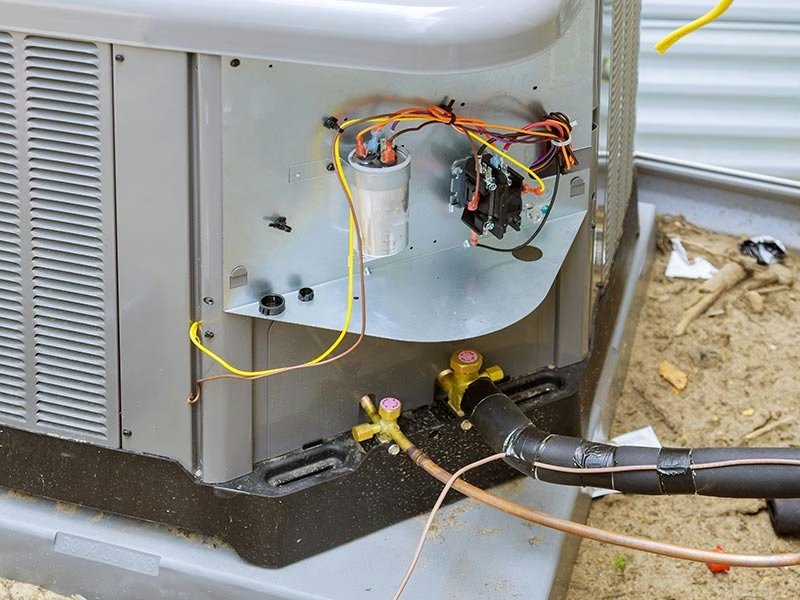
Then there’s the electrical side. A failed run capacitor will let the outdoor fan spin while the compressor hums and trips on thermal overload. A pitted contactor can drop out under load on a 103 degree afternoon and pick back up once things cool at dusk, which is why so many of these calls sound intermittent to the homeowner. A shorted thermostat wire, a tripped condensate float switch on a plugged drain line, or a compressor that has locked up all look identical from the living room. The fan runs and the air is warm.
Outside, a condenser coil packed with grass clippings, cottonwood fluff, or dryer lint can’t reject heat, so pressures climb and cooling capacity drops. Sprinkler overspray in our hard water leaves a chalky scale on the fins that a garden hose won’t remove. In plenty of San Antonio houses the ducts are the real problem, dumping cold air into a 130 degree attic before it ever reaches the back bedrooms. The Department of Energy’s overview of duct sealing explains why leaks undercut even a healthy system.
Warning Signs Worth Acting On Right Away
Some symptoms mean shut the cooling off now instead of waiting for the weekend. Running a starved or low system for days is how a repairable problem becomes a compressor replacement.
- Frost or ice on the indoor coil, or on the copper line at the air handler
- Air from the registers only a few degrees cooler than the room
- The outdoor unit humming or clicking with the fan not turning
- A breaker that trips more than once
- Water stains on the ceiling under an attic unit, or a drain pan holding water
- A hot or burnt electrical smell near the condenser or the air handler
- Cooling that quits every afternoon and returns after dark
- A system that runs nonstop and still can’t hold the thermostat setting
The last few belong in the same-day category. If it’s 105 outside, the house is climbing past 85, and there’s an infant or an elderly parent inside, that’s exactly what emergency HVAC repair exists for.
How a Technician Actually Diagnoses It
A real diagnosis is a sequence of measurements, not a part swap and a hope. This is the order our NATE certified techs work through, and it’s worth following along at your own house so you can see the numbers for yourself.
Confirm the complaint at the thermostat and the filter
First we verify the thermostat is actually calling for cooling and that the outdoor unit responds. Then the filter comes out. If it’s gray and collapsed inward, that tells us airflow has been restricted for a while. We also look at the return grille size, because a lot of older homes here run one undersized central return for the whole house.
Measure the temperature split
We put probes in the return and the supply plenum and compare. On a properly charged system with decent airflow, we generally expect a drop somewhere in the high teens to low twenties in degrees, and humid days pull that number down because the coil is doing latent work. A split of six or eight degrees points at charge or airflow. A split that’s unusually wide with weak airflow often means a coil that’s freezing.
Read the refrigerant side with gauges
Gauges go on and we calculate superheat and subcooling against the equipment’s design values, which differ depending on whether the system uses a metering orifice or a thermal expansion valve. A frozen coil has to thaw completely first, because pressures taken across a block of ice mean nothing. If the charge is genuinely low, we search for the leak with an electronic detector and, where it makes sense, a nitrogen pressure test.
Test the electrical parts under load
Capacitors get read with a meter and compared to the rating printed on the can, not judged by whether they look bulged. We check compressor and fan amp draw against the nameplate values, inspect the contactor points, and verify voltage at the disconnect. Plenty of no-cooling calls in this city end at a weak capacitor or a burnt contactor, both of which are straightforward AC repair jobs when caught early.
Go into the attic and check the ducts
If the equipment measures fine but two rooms stay hot, the problem is distribution. We check static pressure, look for disconnected boots and torn insulation, and measure temperature at the farthest register. That’s when duct cleaning and sealing does more for comfort than any new piece of equipment would.
What Makes Systems Here Fail the Way They Do
Our cooling season is long, and afternoons sit in the triple digits for weeks. Compressors in this metro log far more run hours than the same model would in a milder climate, which means bearings, capacitors, and contactors simply reach the end of their life sooner. Spring pollen and winter cedar fever load filters faster than most homeowners expect, and hard water scale builds on outdoor coils. Expansive clay soil shifts pads and stresses line sets over the years. The 1970s to 1990s housing stock across town tends to have tight returns and original duct runs, while newer suburban builds often have long attic runs that lose capacity before the air arrives. That’s the backdrop for most of our work across San Antonio and the surrounding service areas. It’s also why a spring 21 point AC tune-up catches so much before July does, and why it’s worth checking whether CPS Energy is running a tune-up or efficiency rebate program when you schedule.
A Recent Call That Went the Way It Should
Cruz Sanchez called us because his unit was giving him trouble and he wasn’t sure what he was looking at. That’s the hard part for a homeowner. You can’t tell from the thermostat whether you’re facing a small part, a leak, or a conversation about replacing equipment, and every hour you wait in August feels longer than the last.
We got a technician out quickly and put the work into diagnosing the system properly before quoting anything. Diane Martinez in our office stayed with him through the scheduling and explained what would happen at the visit. In his words, we “showed up fast and were very respectful and honest with the visit to diagnose my unit.” That honesty is the whole point of the diagnostic step. You should know what failed and why before anyone hands you a price.
The field crew repaired it the same day at a price he felt was fair, and he told us he’d recommend us to his family and call us again for future work. One visit, one repair, no return trip. That’s what a measured diagnosis buys a homeowner.
Repair or Replace, Told Straight
Most no-cooling calls are repairs. Capacitors, contactors, float switches, blower motors, and drain clogs are all fixable, and a well-maintained system that’s under a decade old is usually worth fixing without much debate. The conversation shifts when the compressor has failed on aging equipment, when the evaporator is leaking on a system that uses a refrigerant no longer being produced, or when the repair cost starts approaching a meaningful share of new equipment. We’ll lay out both paths with upfront pricing and let you decide. No unnecessary upsells, and no scare tactics about a system that still has years left. For the maintenance side of that decision, the Department of Energy’s air conditioner maintenance guidance and the ENERGY STAR HVAC maintenance checklist are both worth reading.
One Thing to Do Before Anyone Comes Out
If you see ice on the coil or the line, switch your thermostat from cool to off and set the fan to on. Let the blower run for an hour or two so the ice melts, put a towel under the air handler, and replace the filter while you wait. That one step matters more than people realize, because a technician can’t take valid pressure readings on a frozen system. Thawing it before the truck arrives often turns a two-visit problem into a one-visit fix. Once it’s thawed and you’re ready for someone who measures before quoting, our team handles same-day AC repair across the San Antonio metro, and we’re happy to show you every reading we take.
Frequently Asked Questions
Why is my AC running but not cooling the house?
The blower and the cooling process are separate, so the fan can run normally while the system fails to remove heat. The usual culprits are restricted airflow, a frozen evaporator coil, a low refrigerant charge from a leak, or an electrical failure keeping the compressor from running.
How long does a frozen evaporator coil take to thaw?
With the cooling off and the fan set to on, most coils thaw in one to three hours depending on how much ice built up. Never chip at ice with a screwdriver, because the coil tubing punctures easily.
Does low refrigerant always mean there’s a leak?
Yes. A sealed system doesn’t consume refrigerant, so a low charge means it escaped somewhere. Any recharge should come with a leak search and a plan to repair the source.
Is it normal for my AC to struggle on a triple digit afternoon?
Some drift above the setpoint during the hottest part of a San Antonio afternoon can be normal, especially with leaky ducts or thin attic insulation. Running nonstop and losing ground by several degrees is not normal and should be checked.
Can a dirty filter really stop my AC from cooling?
It can. A heavily loaded filter cuts airflow across the coil enough to freeze it solid, and a frozen coil stops cooling almost entirely. It’s the single most common cause we find on summer no-cooling calls.
Sources and References
About the Author
Alonzo Martinez is the owner of Smart Choice Heating and Cooling, a family owned company that has served San Antonio and the surrounding metro for over 15 years under license TACLB 103516E. He leads a team of NATE certified technicians who handle diagnostics, repairs, tune-ups, and installations across more than 25 service areas. His approach is simple: measure first, explain the findings, and quote honestly.